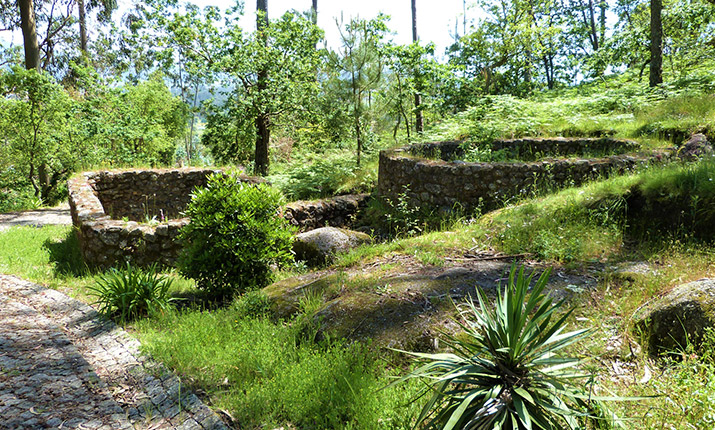
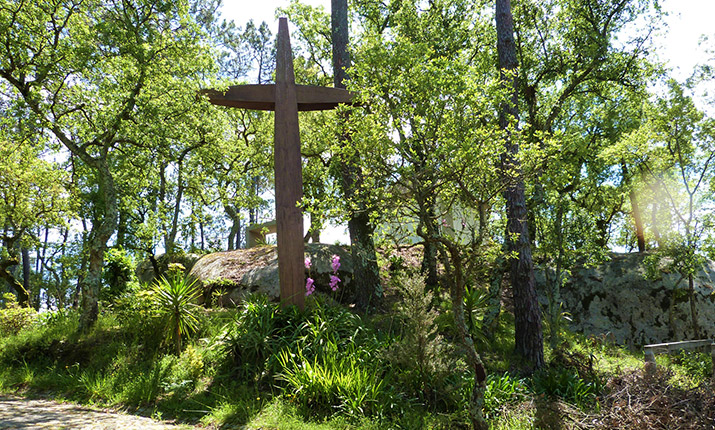
The Hill Fort of Senhor dos Desamparados owes this curious name to its most recent military use - during the French invasions in the early 19th century. The inhabitants of the neighborhood would have gone up the hill where the hill fort was located to offer resistance to the invaders - an allegory of what the early settlement might have done during Roman invasions. This hill Fort or "Castro" is an exception regarding the locations of the other settlements of the same type in this region. It is not deployed in one of the high fossil cliffs, the line of elevation that separates the Atlantic plains from the mountainous inland. As an exception, it also has an oval storage structure, which was recently discovered in this area during an excavation season.
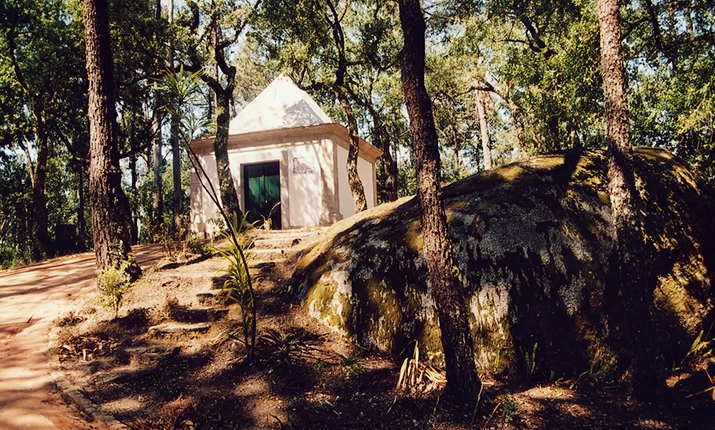
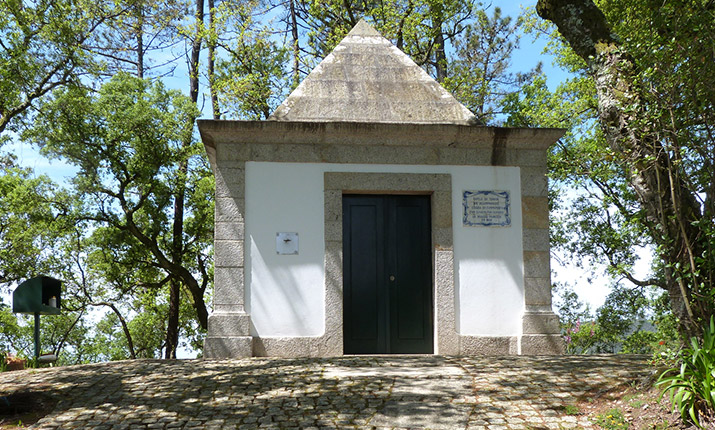
The Chapel of Senhor dos Desamparados was erected on top of the hill fort, between the years 1825 and 1826, in response to a promise made during the French invasions. The rectangular temples are facing east and were entirely built in stone, including the roof. In 1976 it underwent restoration works. Every year, at the first weekend of August, the people of Palmeira de Faro hold their festival here in honor of Senhor dos Desamparados.
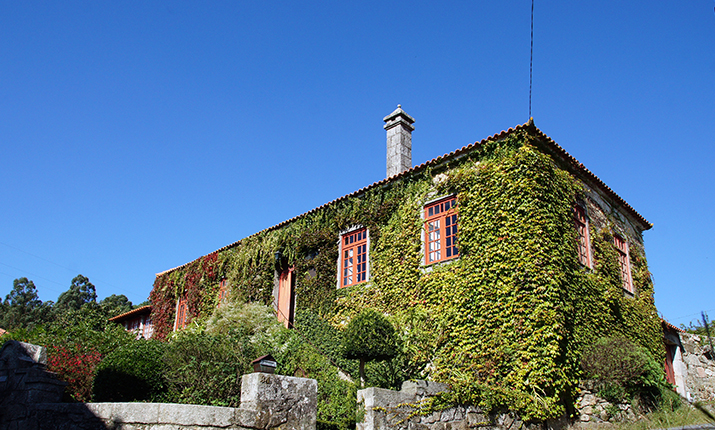
In Lugar de Susão, we will find the House of Manuel Boaventura, author and short story writer who died in 1973, and who uniquely portrayed the ways of life and customs of the people of Esposende.
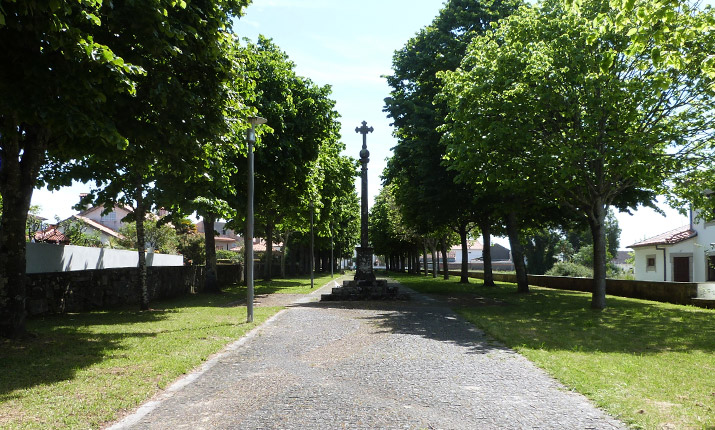
An inscription on the pediment of the Chapel of Saint Anthony indicates that the building dates back to 1776, with a later restoration carried out in 1976.
It is a rectangular-plan structure facing west, with a sacristy attached to the northern side. The chapel features an austere and simple façade. Two small barred windows flank the entrance door, which is topped by a triangular pediment. Inside, one can find the inscription marking both the construction and restoration of the building. Above it is a quadrilobed oculus, while the façade is crowned by a curved pediment flanked by two pinnacles. Recently, to break the monotony of the white façade, a tile panel depicting the patron saint was added.
Every year, Saint Anthony’s Day (13 June) is celebrated here with a religious and popular festivity of great tradition, attracting many visitors and locals alike.